vicarious trauma
“We are talking about the ways in which the world looks and feels like a different place to you as a result of you doing your work… ….and the transformation that takes place within us as a result of exposure to the suffering of other living beings.”
Laura van Dernoot Lipsky
Trauma Stewardship: An Everyday Guide to Caring for Self While Caring for Others
What is Vicarious Trauma?
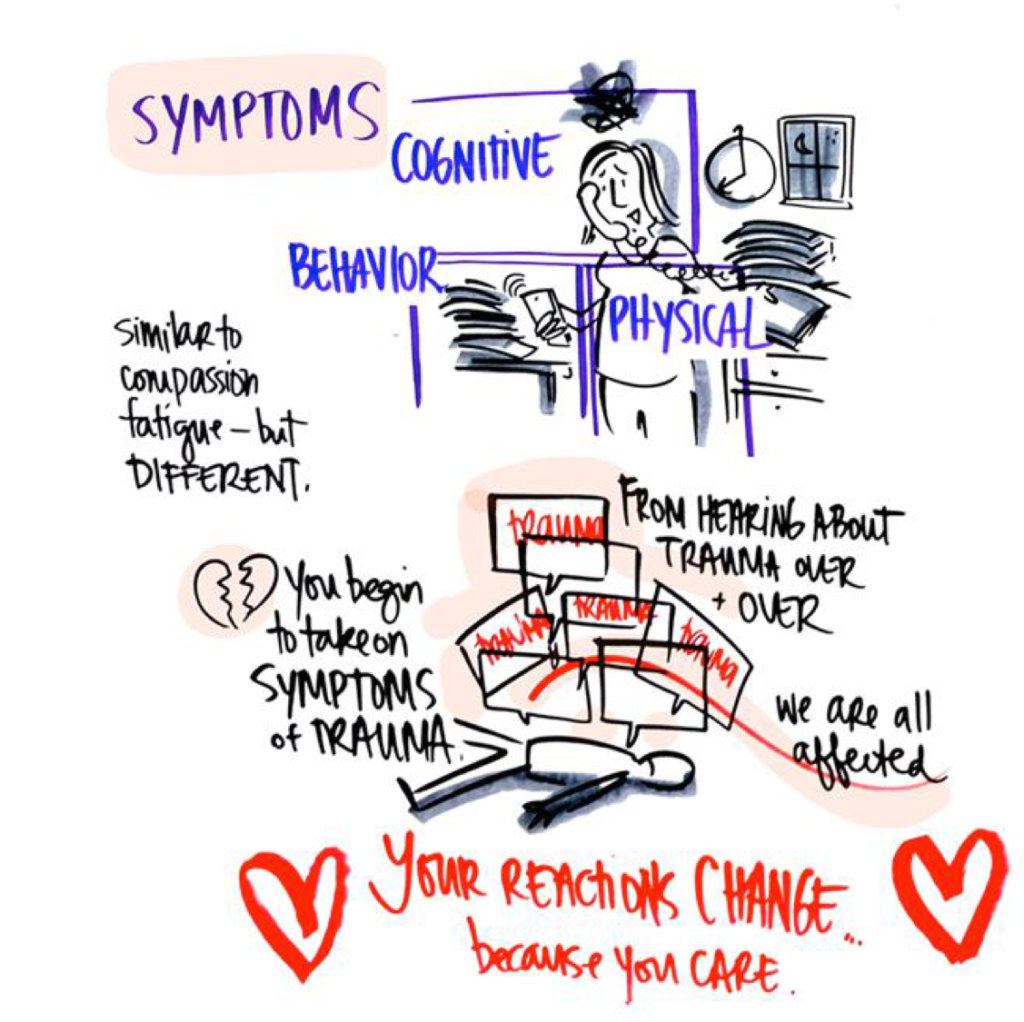
- An inevitable part of any role that involves witnessing or working with the impacts of other people’s pain
- Changes the way we see ourselves, the work and our world
- Not about personal weakness or a lack of resilience
- Can be safely managed on an individual level through targeted self care and self awareness
- Can be safely managed on a team and organisational level by creating a culture of support and vigilance using tactics such as supervision, monitoring, debriefs and boundary setting
My approach is informed by:
The award-winning holistic Workplace Vicarious Trauma Management Plan developed by Rape and Domestic Violence Services Australia which, during my time working there, helped me to offset the cumulative psychological impacts of a decade of trauma-based work in ways I didn’t realise were possible. I understand VT as a workers’ rights issue which as well as personal awareness requires support from employers and unions. I have ten years of teaching Vicarious Trauma workshops to a range of audiences including:
- midwives in community and hospital settings
- senior medical staff
- tech workers
- content moderators
- customer support specialists
- lawyers and paralegals working on cases of historic child sexual abuse
- care workers in secure psychiatric units
- frontline domestic violence advocates
- migrant justice activists
- social workers
“Bearing Witness: Midwifery, Vicarious Trauma and You“

I developed an immersive and interactive one-day Vicarious Trauma Awareness workshop specifically for midwives, midwifery students and other birth workers. Coverage of this project in Royal College of Midwives magazine here.
This content has been delivered to over a hundred practicing midwives and student participants in hospitals, birth centres, Community Midwifery teams, universities, health boards and Royal College of Midwives (RCM) branches, including for midwives and midwifery students at:
- Swansea University
- Swansea Bay University Health Board
- Cardiff & Vale University Health Board
- Powys Teaching Health Board
- Hywel Dda University Health Board
- Betsi Cadwalladr Health Board
- Merseyside Women’s Hospital
- Nottingham University Hospital
What sort of things does it cover?
- Introductory overview of VT?
- Historical context, clinical definitions and practical examples
- How does VT affect our brain, mind and body?
- What do we need to notice and address it?
- How does this look for you and what can you do about it?
- Identifying impacts of the work in brain, mind and body
- Identifying, managing and limiting your impacts
- The cycle of birth trauma, midwifery and VT
- Action plans for organisational and individual commitments
- Practical skills for creating (and maintaining!) self care plans
This offering includes takeaway resources and printed materials, and personalised follow up.
Who else is this suitable for?
If you think this is relevant for you, it probably is! Session content can be adapted to fit your sector, industry or community. I will work with you to create the day you need.